Precision FPGA Synthesis
Precision offers vendor-independent FPGA synthesis. It provides best-in-class performance and area, high-reliability design capabilities and tight links to simulation and formal equivalency checking.
Precision Synthesis Solutions
Siemens offers three unique FPGA synthesis solutions – Precision Hi-Rel, Precision RTL Plus and Precision RTL. Precision's products are tightly integrated with Siemens' FormalPro LEC for equivalency checking and HDL Designer for design capture and design verification using ModelSim/Questa.


Advanced Synthesis for NanoXplore FPGAs
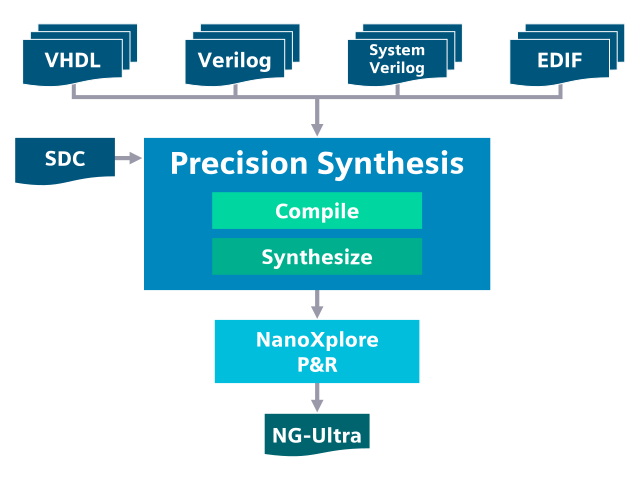
Many space and mil-aero applications require specialized FPGAs with built-in protection from SEEs. NanoXplore introduces new FPGAs targeting this market. Precision Synthesis, in close partnership with NanoXplore, is the first to offer full synthesis support for the NG-Ultra device. Precision has seamless integration with the NXmap P&R tool to complete the design flow from RTL to gates to bitstream generation.